
Lot's going on
Data centers, Iran war, ETS, gas and power prices

This is a slightly unusual newsletter, but there’s so much going on I figured a summary of the latest developments might be more useful than the usual format.
Data center siting tool
Firstly, an announcement. I built an app that lets you place data centers in different countries and compare costs, emissions, power supply options and grid access conditions. It’s a prototype and definitely work in progress…
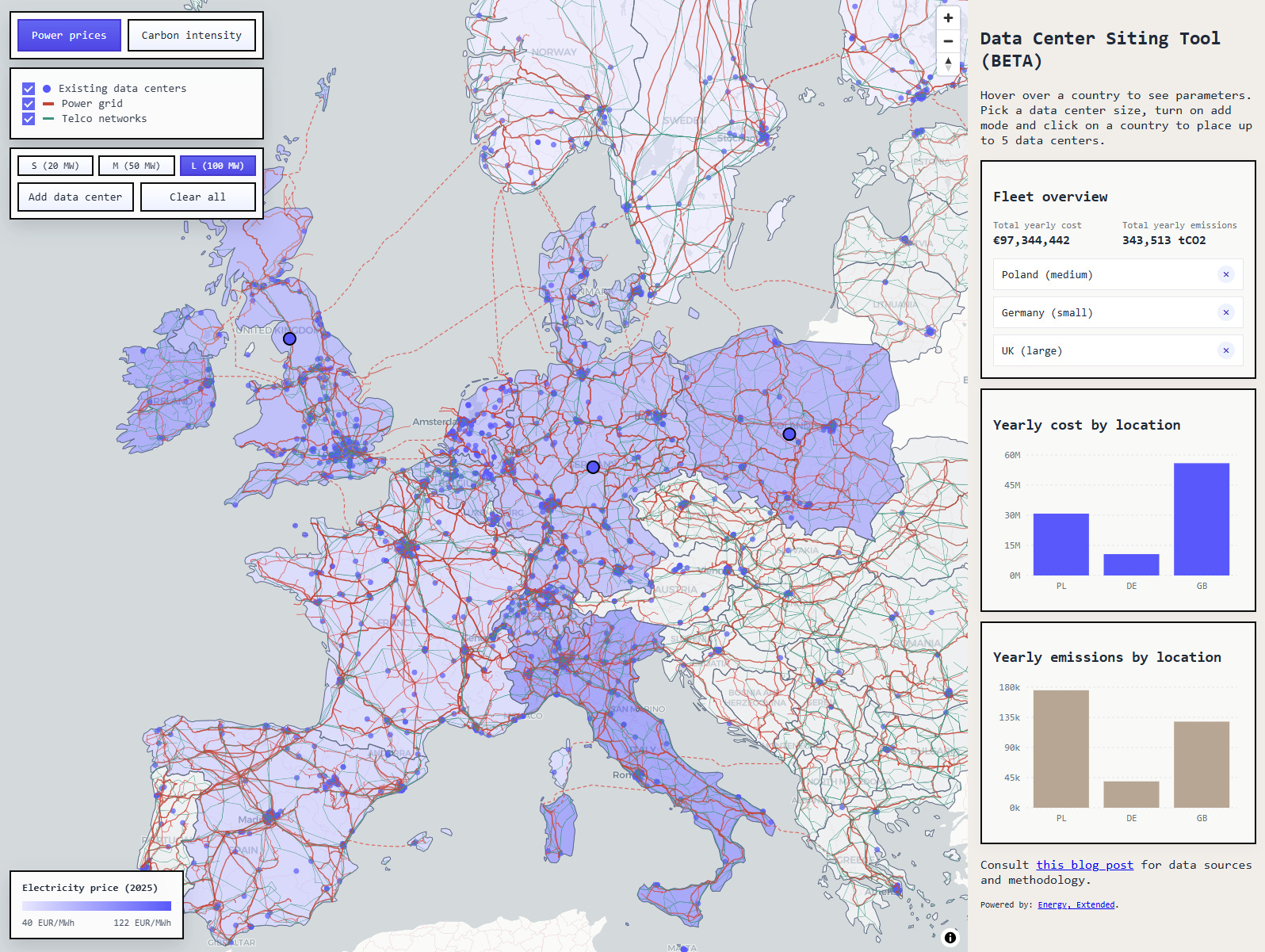
The goal was to visualize some datasets that might be useful in planning data center locations. For now, I’ve added power prices and carbon intensity of power generation, plus electricity and telco infrastructure. Some other data is hidden in the popups: like grid congestion and PPA market stats. You can already see some patterns - locations with cleaner grids and lower prices deliver millions in yearly electricity supply savings, plus emit tens of thousands tons of CO2.
The tool is inspired by the positive response to my recent data center stories. I would recommend the post below for more technical background.

If you like the app, please share some feedback in the comments or via LinkedIn: could this be helpful in your work? What features and datasets would you like to see in the future?
Power prices are surging, and gas is to blame
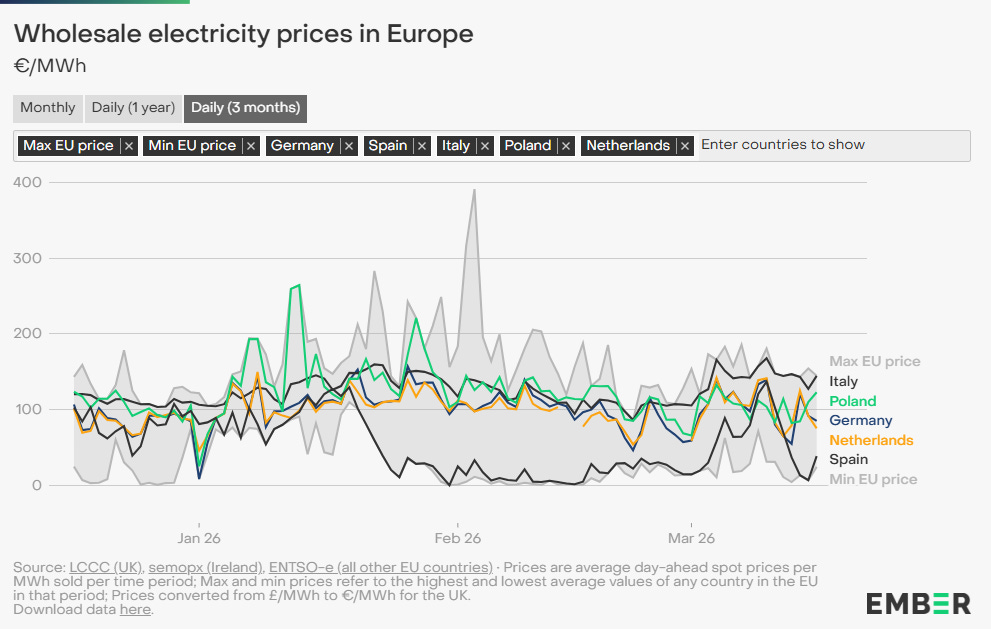
The escalation of the conflict in the Middle East pushed European gas prices up 50%. This caused electricity prices to jump 50%+ over the past two weeks. It’s now quite obvious that Europe’s issues with energy affordability (and competitiveness) are caused by gas.

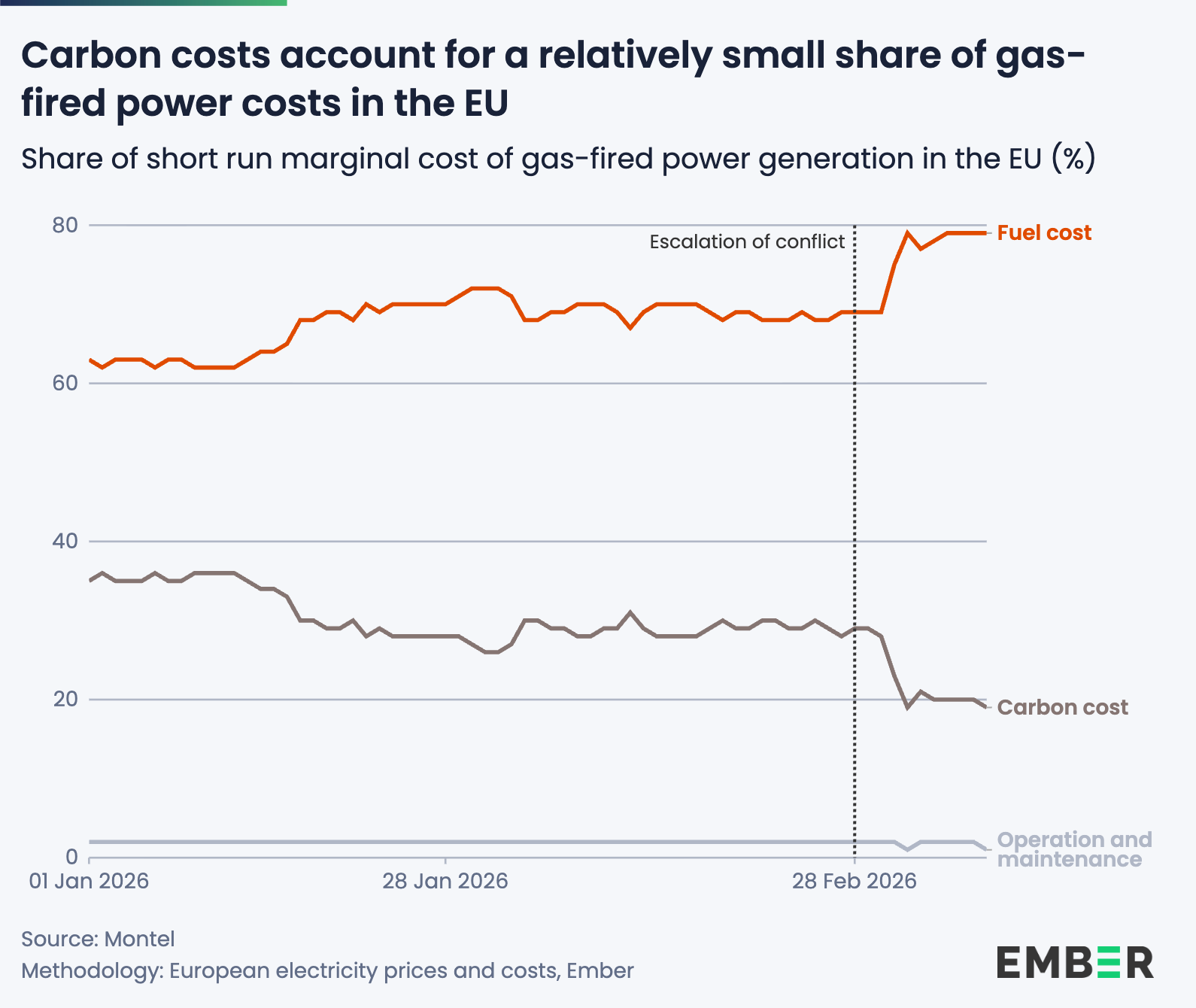
However, European industry has been blaming the EU ETS instead, calling for the dismantling of Europe’s energy markets and key regulations. At Ember we’ve published a piece that exposes the falseness of that idea. The ETS is a small part of electricity costs. To increase competitiveness, Europe should focus on reducing gas reliance, plus cutting taxes and levies. In fact, the VAT is a much bigger component of the average household electricity bill than the ETS…
Some countries are doing better than others
While most European countries saw an increase in power prices after the Iran conflict escalation, some were less affected than others. In Spain, Monday power prices were almost 4 times lower than in Italy! Why?
In short: thanks to the rapid deployment of wind and solar capacity. Between December 2019 and June 2025, Spain doubled its wind and solar capacity, adding over 40 GW. This is more than any EU country except Germany – a power market twice the size.
This allowed Spain to largely decouple electricity prices from gas - solving a pain point that's been crippling many European economies: the volatility of gas prices.
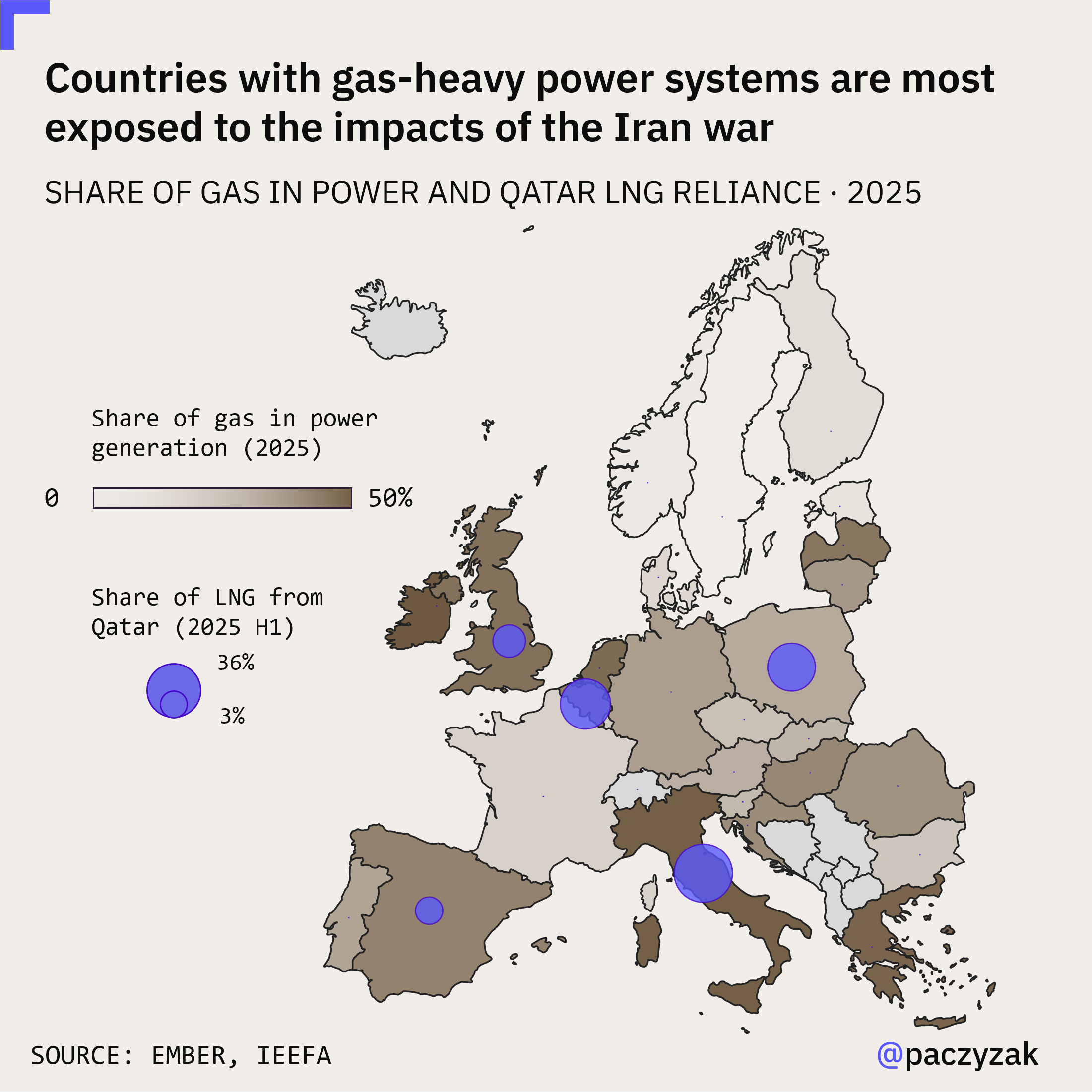
Gas influenced the Spanish electricity prices only during 15% of the hours in 2026, compared to a whopping 89% in Italy. Which means Spain's power remained among the cheapest in the EU throughout February, and prices increased only briefly after the US-Israel attack on Iran.
Which clearly shows that you can achieve affordability and competitiveness without fiddling with market designs and ETS's...
Thank you for reading this somewhat chaotic edition of Energy, Extended!
If you’d like to receive a usually more structured story every Wednesday morning, subscribe below:
Great work! Thanks for sharing
Great data, examples of countries and tools to use in discussions. Thanks a lot for this work.