

Geothermal energy has been around for a while, but it’s widely considered too expensive outside of volcanic regions like Iceland. But recent technological advancements are unlocking geothermal potential across Europe.
According to Ember’s latest report, geothermal energy could in fact replace 42% of EU fossil electricity, at costs comparable to coal and gas.
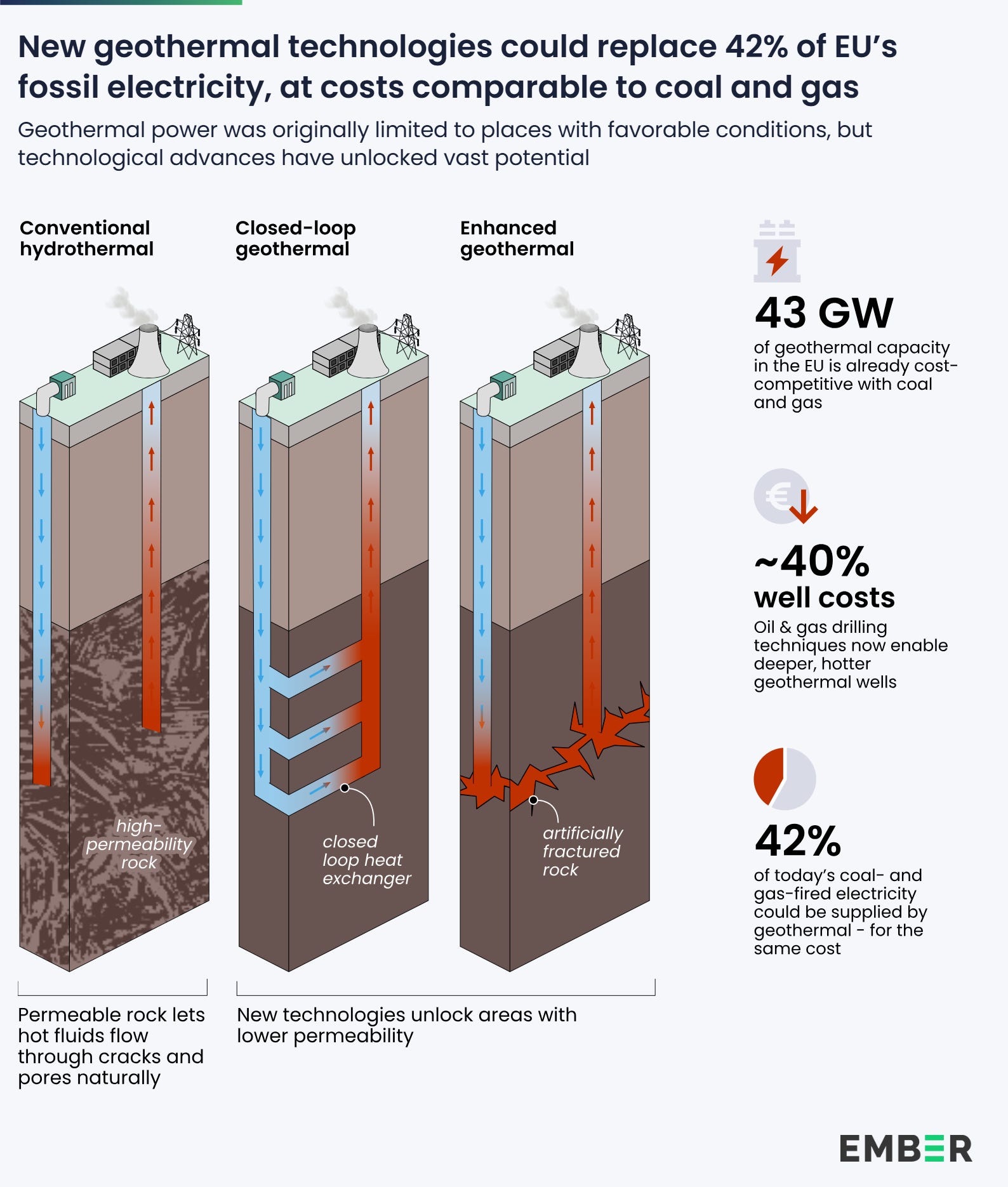
To be more specific, we're talking about costs of electricity (LCoE) below €100/MWh. For comparison: costs of coal and gas power in 2025 oscillated between 90 and 150 €/MWh in 2025.
This change is happening because of advances in drilling technology. We can now drill deeper and cheaper, expanding the potential to regions that don't necessarily have favorable geothermal conditions. And that opens access to the many benefits of geothermal - high capacity factors, synergies with heating, energy storage possibilities.
A triple win: geothermal, data centers and district heating
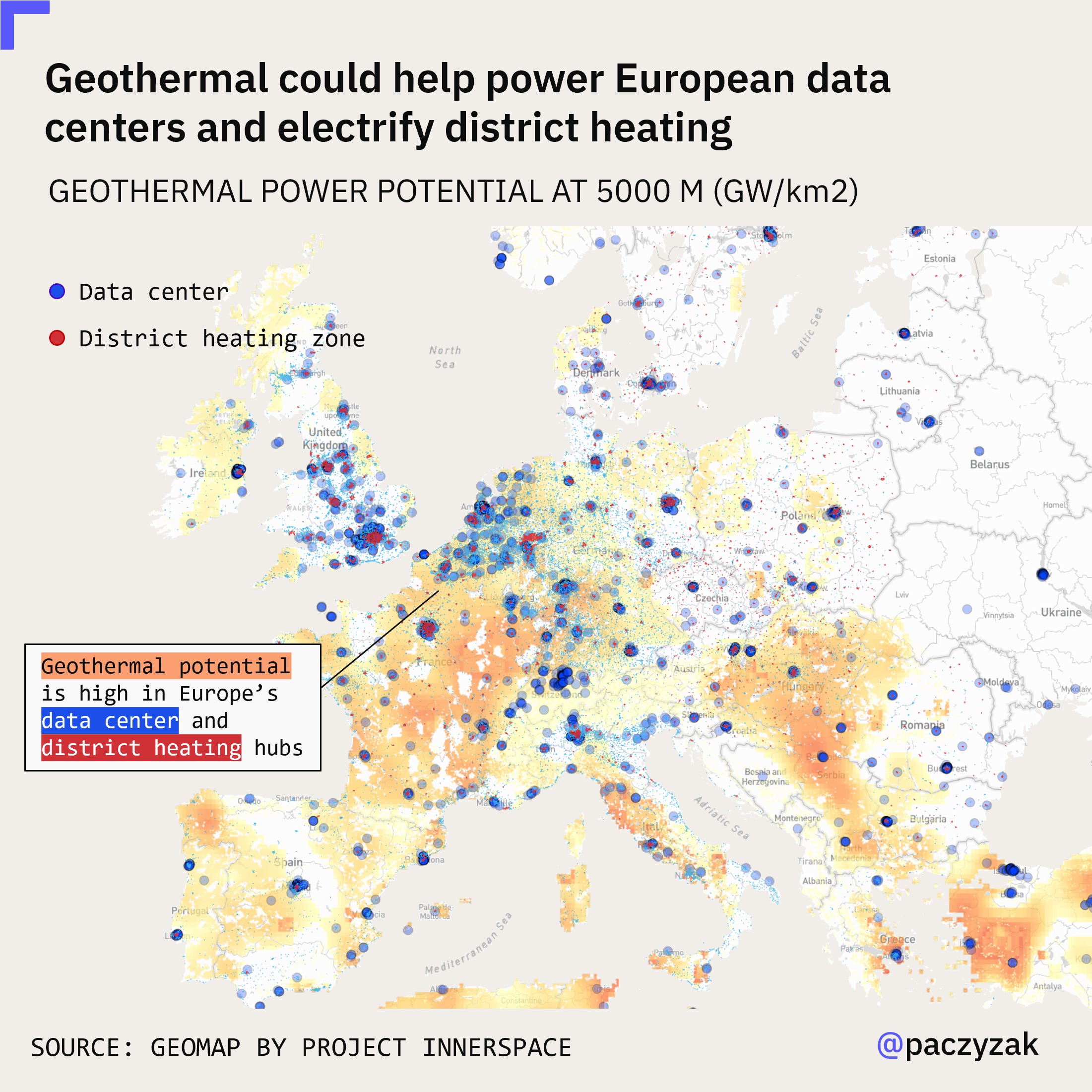
The really cool part is that the geothermal potential correlates very well with both Europe’s biggest data center hubs - like Paris, Amsterdam, Frankfurt, and the existing and planned district heating networks. So here’s a win win - use geothermal to power a data center, and then use the excess heat from the power plant and the data center in district heating.
The map below shows geothermal potential at 5000m from Project Innerspace. Projects at these depths are already in operation in Europe (Cornwall and France), although not without teething problems. Still, in 2024, 3 geothermal power plants with 40 MW capacity were commissioned - in Austria and Türkiye. Around 50 power generation and 500 heating projects are currently in development, according to EGEC Geothermal. In China, researchers are exploring depths of 5000-8000m, at which point you can generate power almost anywhere.
As always, there's an industrial strategy angle to it. Europe is one of the pioneers of geothermal energy, Iceland being an obvious example. But without a EU-wide plan and with our usual lengthy permitting, we are falling behind US and Canada - the titans of drilling, and China - the titans of everything.
Speaking of Iceland and industrial strategy…
Iceland: prosperity through clean power
While living in Iceland, I visited all the geothermal power plants. The technology is astonishing, but perhaps the even more interesting story is how clean power helped transform Iceland’s economy.
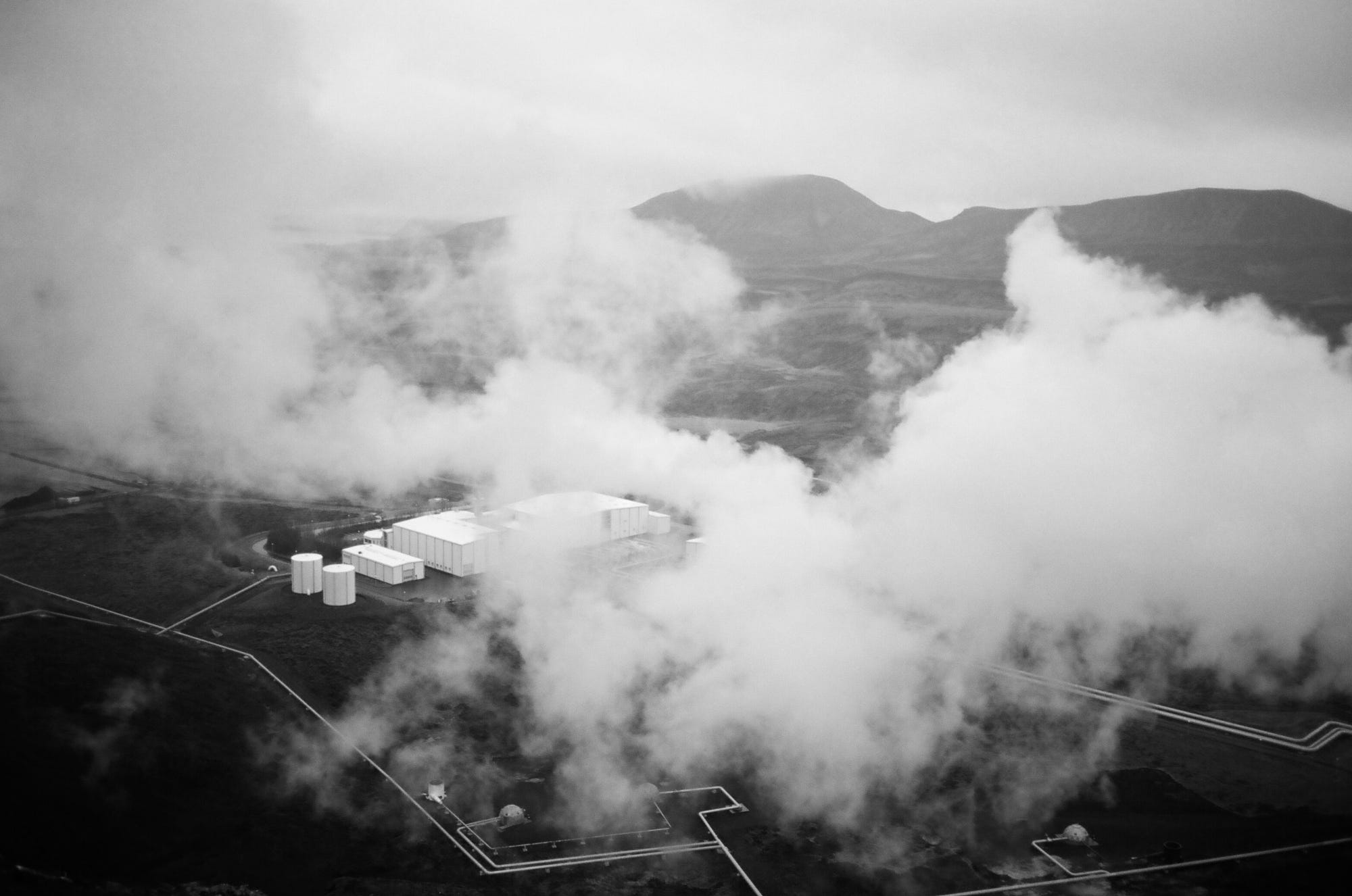
In 1940, 70% of Iceland's energy came from coal. Then came oil, in 1960 providing ~70% of energy. By 2020, over 80% of primary energy consumption is geothermal and hydro. Today, the electricity mix is all clean, 70% hydro, 30% geothermal.
Let's compare that with the economy. In the early 1900s, Iceland was one of the poorest Western economies. In 1960, the GDP per capita was half of the US's. Today, Iceland has the 5th highest GDP per capita in the world.
Many factors contributed to the economic success, one of them being the surplus of cheap electricity. This unlocked the growth of the energy-intensive aluminium industry, which is now a third of Iceland's exports, and the top 3 contributor to the GDP. Of course there are challenges too, including environmental concerns.
Still, like in the case of other Nordic countries, I admire how the energy resources have supported a thriving society thanks to wise and consistent strategy. Iceland has a great IT and services industry, is a cultural hub, and is of course a tourist hot spot. And it's genuinely a fantastic place to live.
A similar strategy is now boosting growth in the Baltic States, where the surplus of clean power is being coupled with innovation, tech, finance, and again long-term strategic planning. Very cool to see it happening. Could enhanced geothermal unlock a similar pathway for Hungary or Slovakia?
What needs to happen is a political and investment push. And then we can decarbonize district heating, which is not going too well, and we’ll have more clean power for our AI ambitions.
Thank you for reading and see you next Wednesday (or Tuesday),
Pawel
If you’re not a subscriber yet but would like to receive a story like this every week, consider registering: